Research · 2024 · 3 weeks
Duolingo: Design for All?
A comprehensive research study analyzing Duolingo's user experience across diverse learner types and identifying opportunities for more inclusive design
This research explores whether Duolingo's design truly serves all users effectively, analyzing user feedback, dropout patterns, and learning struggles to provide actionable insights for more inclusive design.
- Duolingo
- Research
- Personas
- Accessibility
- Survey

Problem Statement
Duolingo serves a wide and diverse user base, offering over 100 courses across more than 40 languages to millions of learners worldwide. But since so many people use the platform, it's hard to fully understand and meet everyone's unique needs. Duolingo does track user behaviour with advanced tools, but the platform needs a more detailed, persona-based approach to make sure its design and features work well for all kinds of learners.
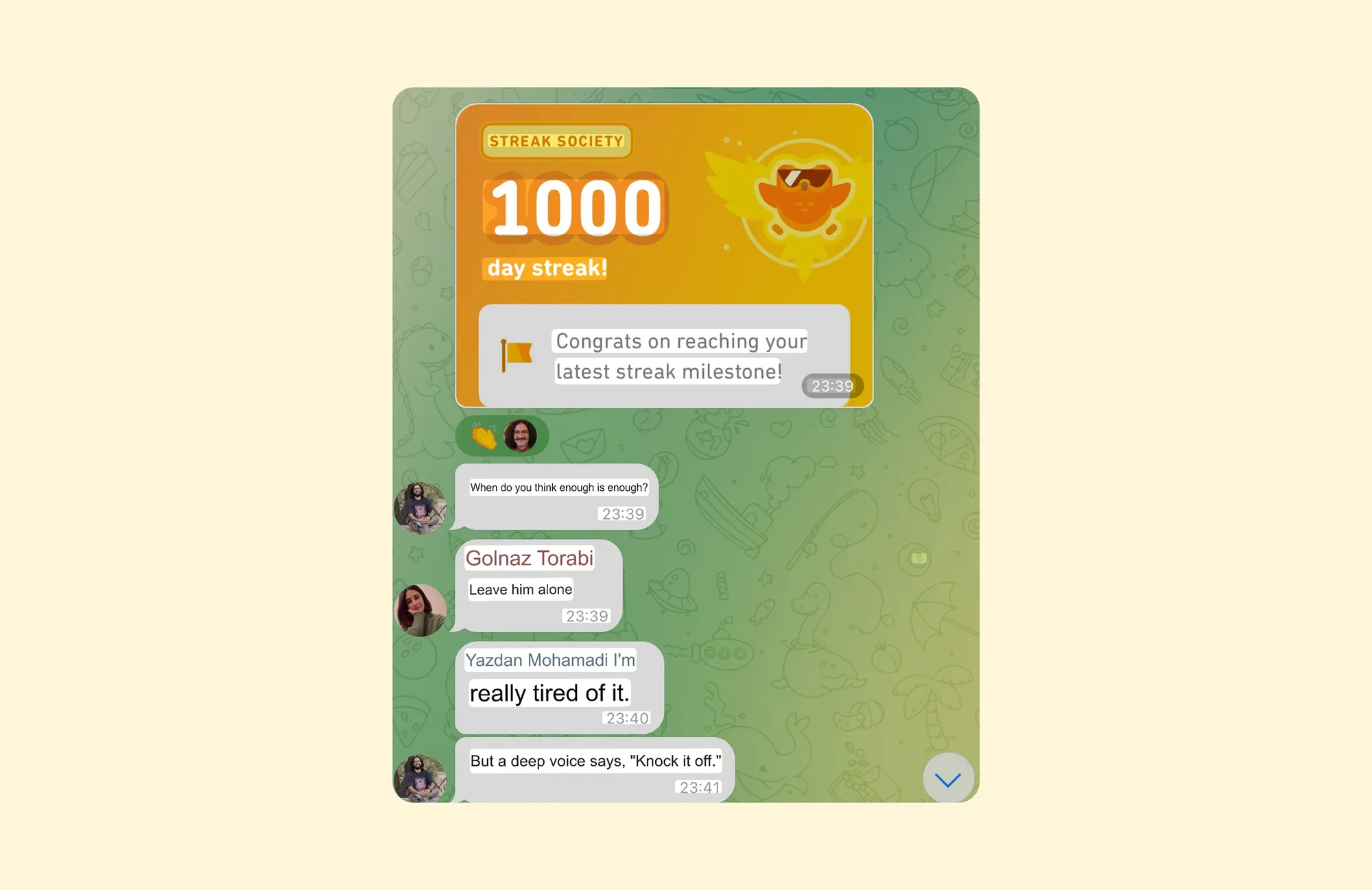
Key Research Question
This question keeps coming to mind: Is Duolingo's design truly based on "Design for All"?
What is Design for All?
Design for All is an approach that ensures products and services are accessible and usable by people with the widest possible range of abilities, operating within the widest possible range of situations.
Objective of our project
Our research aims to identify user groups that struggle with Duolingo, analyze why the platform does not fully meet their needs, and provide design recommendations to improve inclusivity.
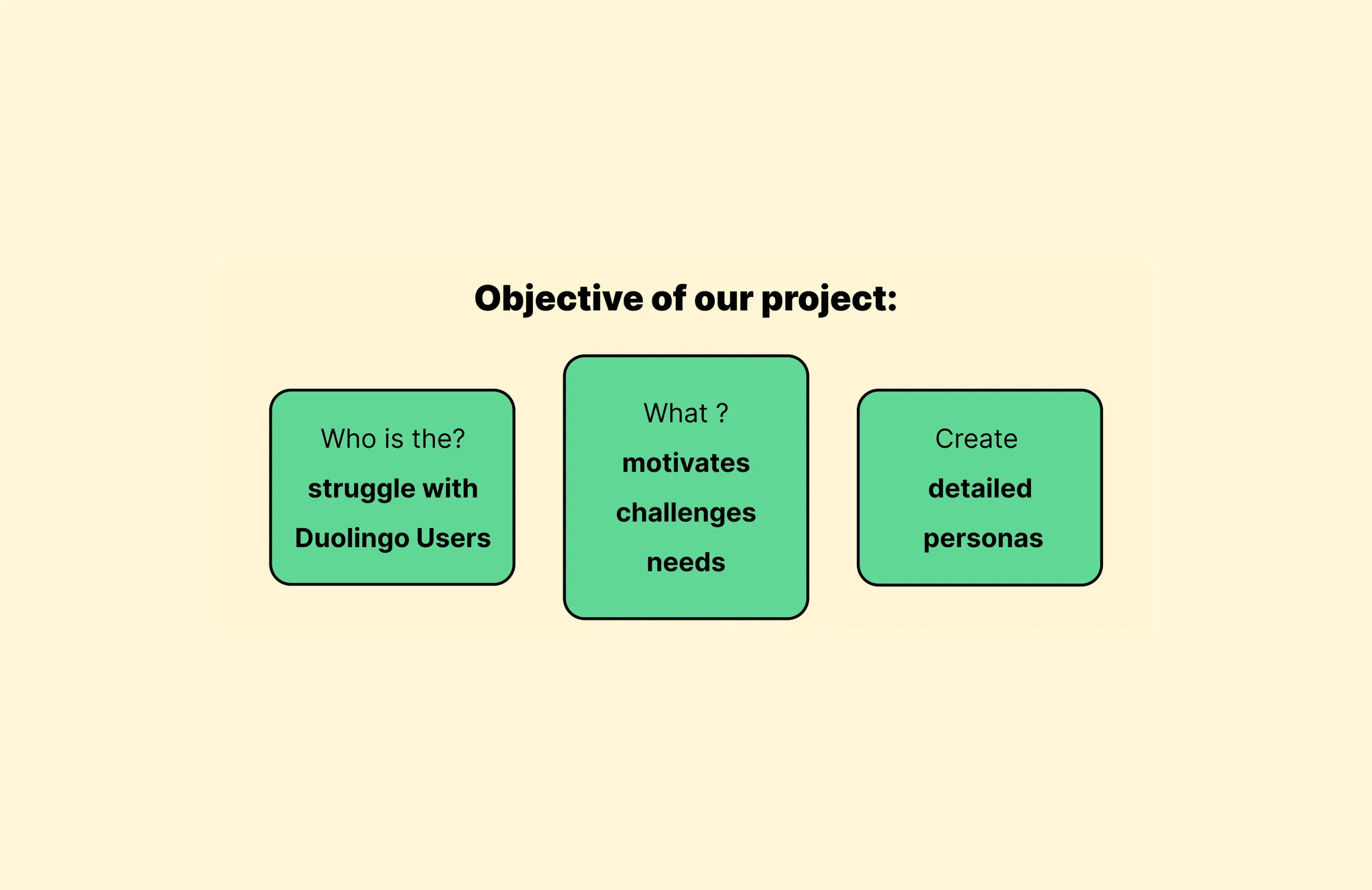
Key Objectives:
• Identify user groups that struggle with Duolingo
• Analyse why the platform does not fully meet their needs
• Provide design recommendations to improve inclusivity
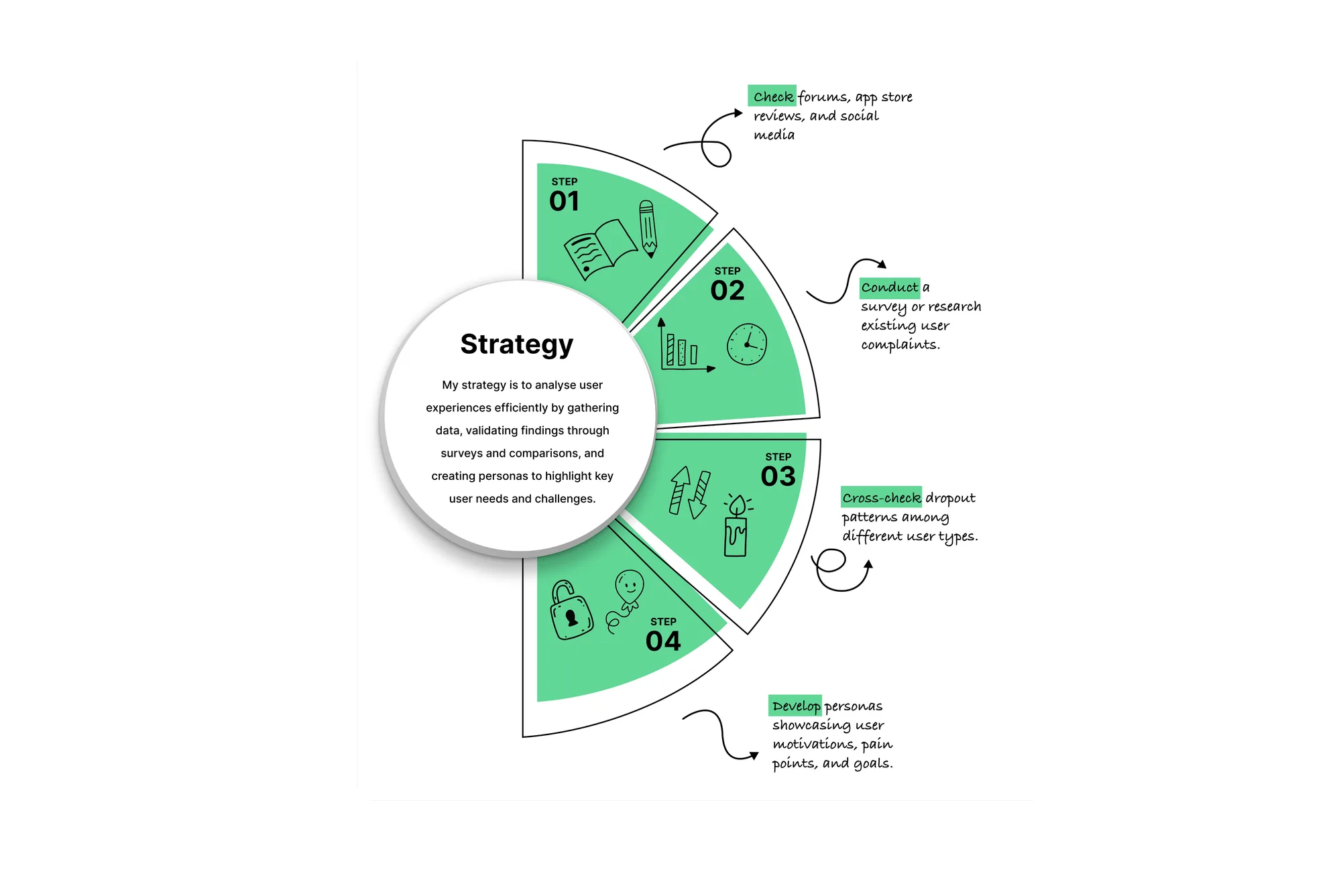
My Research Strategy
The most important part for me is selecting my strategies and planning. Here, I define them based on my objectives. Since it appears to be quite costly, I should maintain the fastest and most cost-effective model.
Research & Data Collection:
• Check forums, app store reviews, and social media for user complaints
• Study dropout rates, engagement trends, and common learning struggles
Strategy to Validate:
• Conduct a survey for existing user complaints
• Cross-check dropout patterns among different user types
Create Personas:
• Develop 3-5 detailed personas showcasing user motivations, pain points, and goals
Research & Data Collection
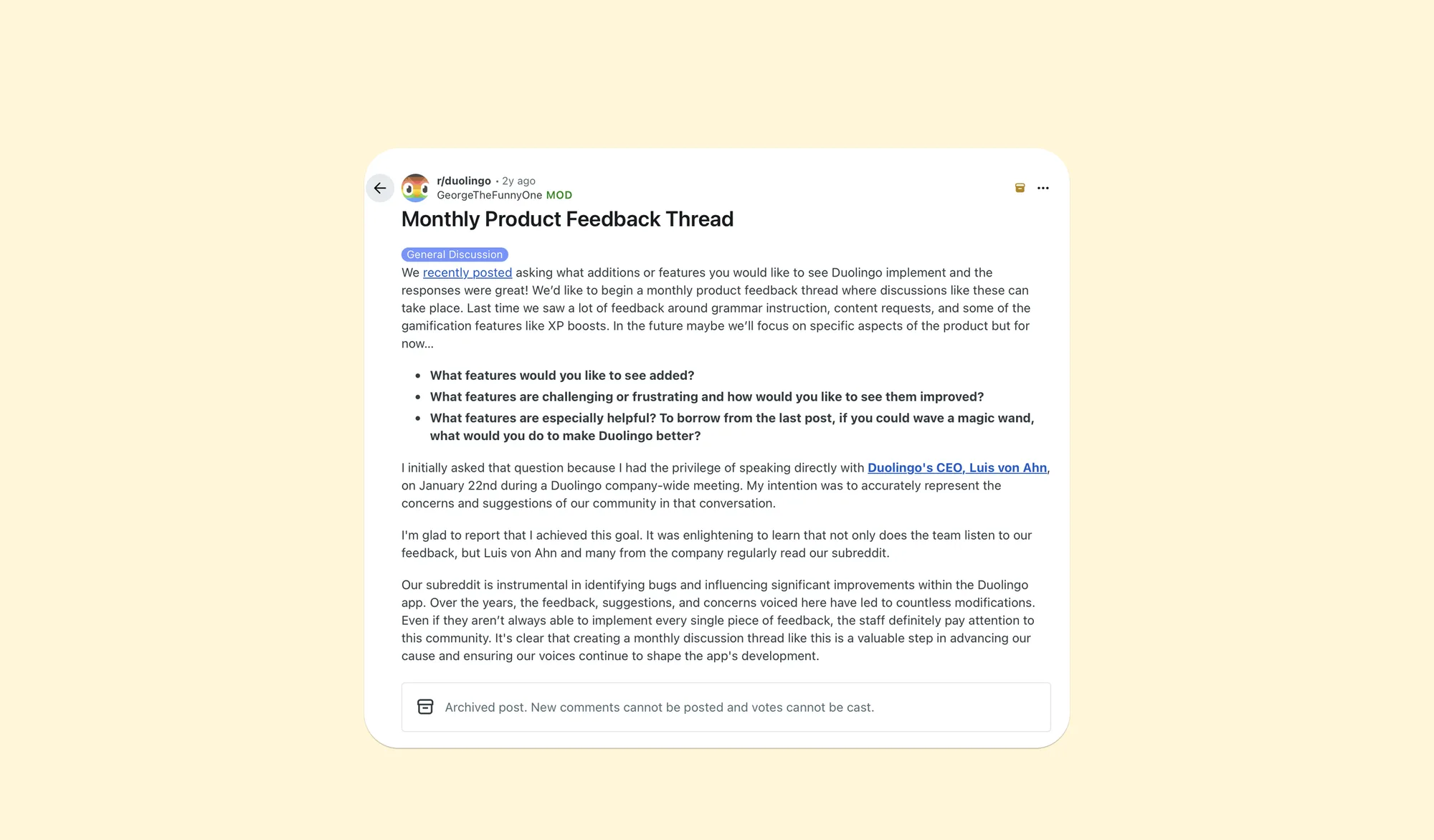
If you've ever collected data manually without APIs, you know how easy it is to get lost in endless information. To stay focused and efficient, I start by designing a structured table for my desk research data. A well-planned table helps me stay organized, filter relevant insights quickly, and avoid getting sidetracked.
Data Sources:
• Reddit (Duolingo subreddit)
• App Store Reviews
• Twitter Feedback
• Duolingo Forum
User Type Analysis
I need to segment users to better understand their needs and usage patterns, allowing me to address their pain points effectively.
• Analyse comments and reviews
• Identify patterns in user goals and pain points
• Group them based on similarities and assign names
Some common themes to look for:
• "I wish Duolingo had more advanced lessons" → Advanced Learners
• "I keep losing motivation" → Casual Users
• "I need to prepare for an exam" → Academic Learners
• "I just want to practice speaking" → Conversational Learners
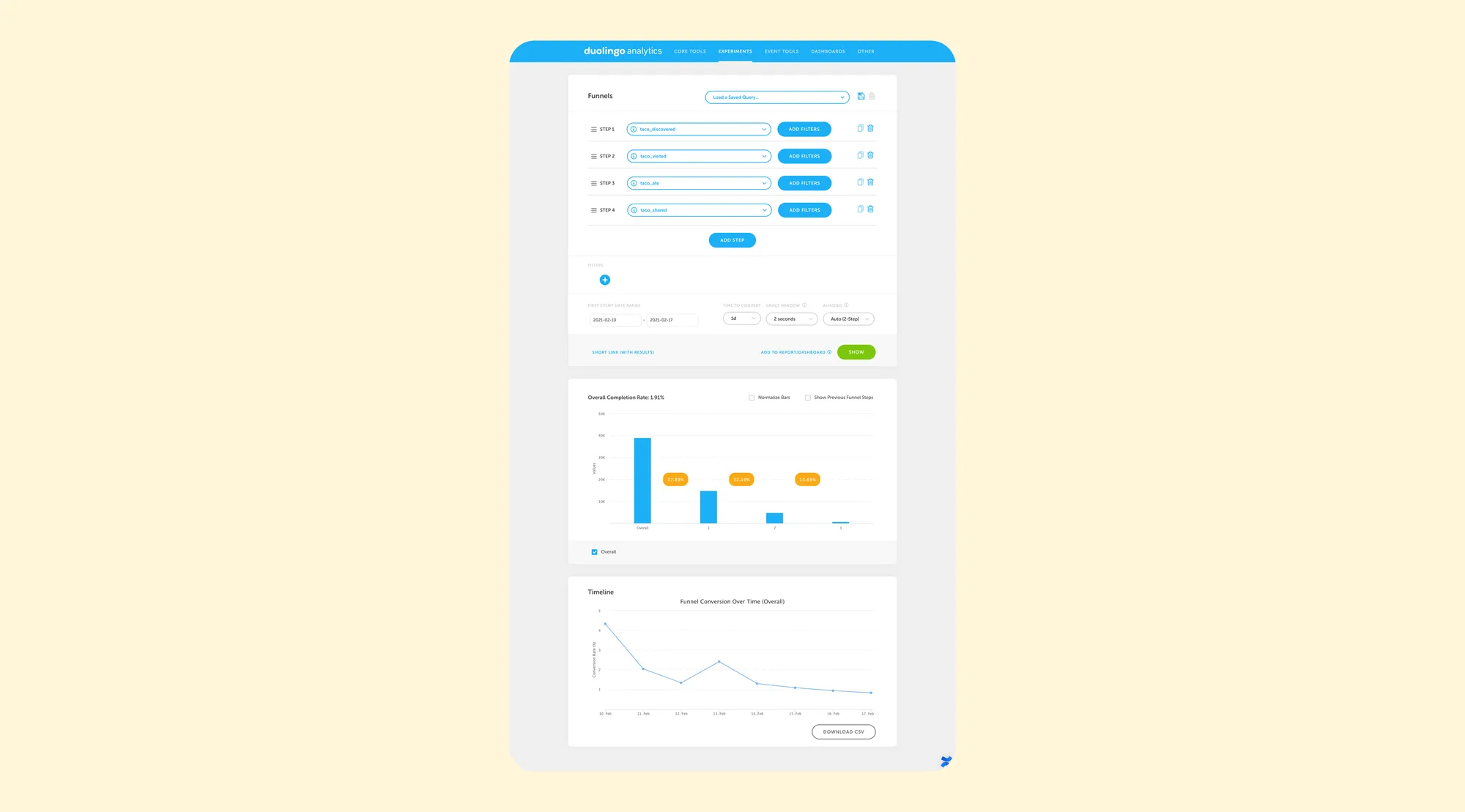
User Analysis Table
- Advanced Learner
- Lessons lack depth, grammar explanations are too simple - Need for advanced content
- Recasual User
- Lose motivation, feel lessons are repetitive - Disruption in learning experience
- Beginner
- Users retry voice exercises multiple times - Tech accuracy issue
- Serious Academic Learner
- Seek additional resources outside Duolingo - Lack of in-depth grammar instruction
- Conversational Learner
- Pick up basic phrases for travel - Insufficient real-world conversation practice
Analyse Dropout Rates
I wanted to understand when and why users stop using Duolingo, so I started by checking user reviews. I looked for phrases like "I gave up after a few weeks" or "It became too repetitive" to spot common frustrations.
Many Duolingo users stop using the app because it starts feeling repetitive and more like a task than a fun learning experience. Some express frustration, saying they lose interest over time as lessons become monotonous.
Another common issue is the pressure of maintaining a daily streak. While streaks are meant to encourage consistency, they can also feel overwhelming, making users feel trapped rather than motivated.
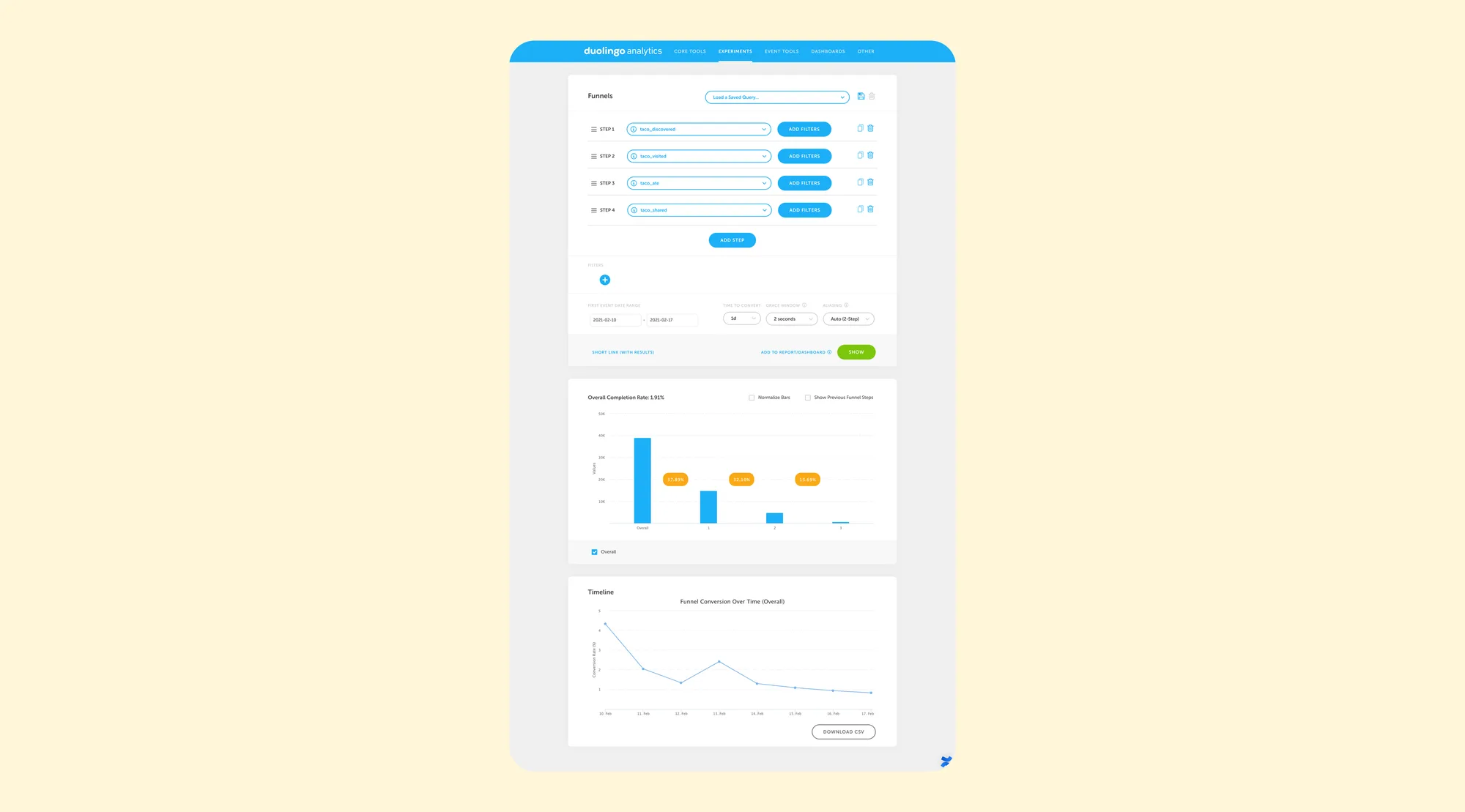
Early Dropout Patterns
Early Dropout: Some users leave after a few weeks, possibly due to unmet expectations or lack of engagement.
Example: A user noted, "I started towards the end of beta and got 100-200pts per night for a couple weeks. Eventually, however, I began to get annoyed with the platform."
Intermediate Plateau: Users may feel that the content doesn't progress in difficulty, leading to disengagement.
Example: A discussion highlighted, "After 5 years of being an enthusiastic Duolingo user... I find that I no longer enjoy the learning experience that the Path offers."
Identify Common Learning Struggles
Look for repeated complaints about learning difficulties:
• Beginners: "Lessons move too fast, I don't understand grammar."
• Advanced Learners: "No real challenge after reaching higher levels."
• Casual Users: "I forget what I learned, and it doesn't feel practical."
• Conversational Learners: "Not enough speaking practice."
Survey Validation
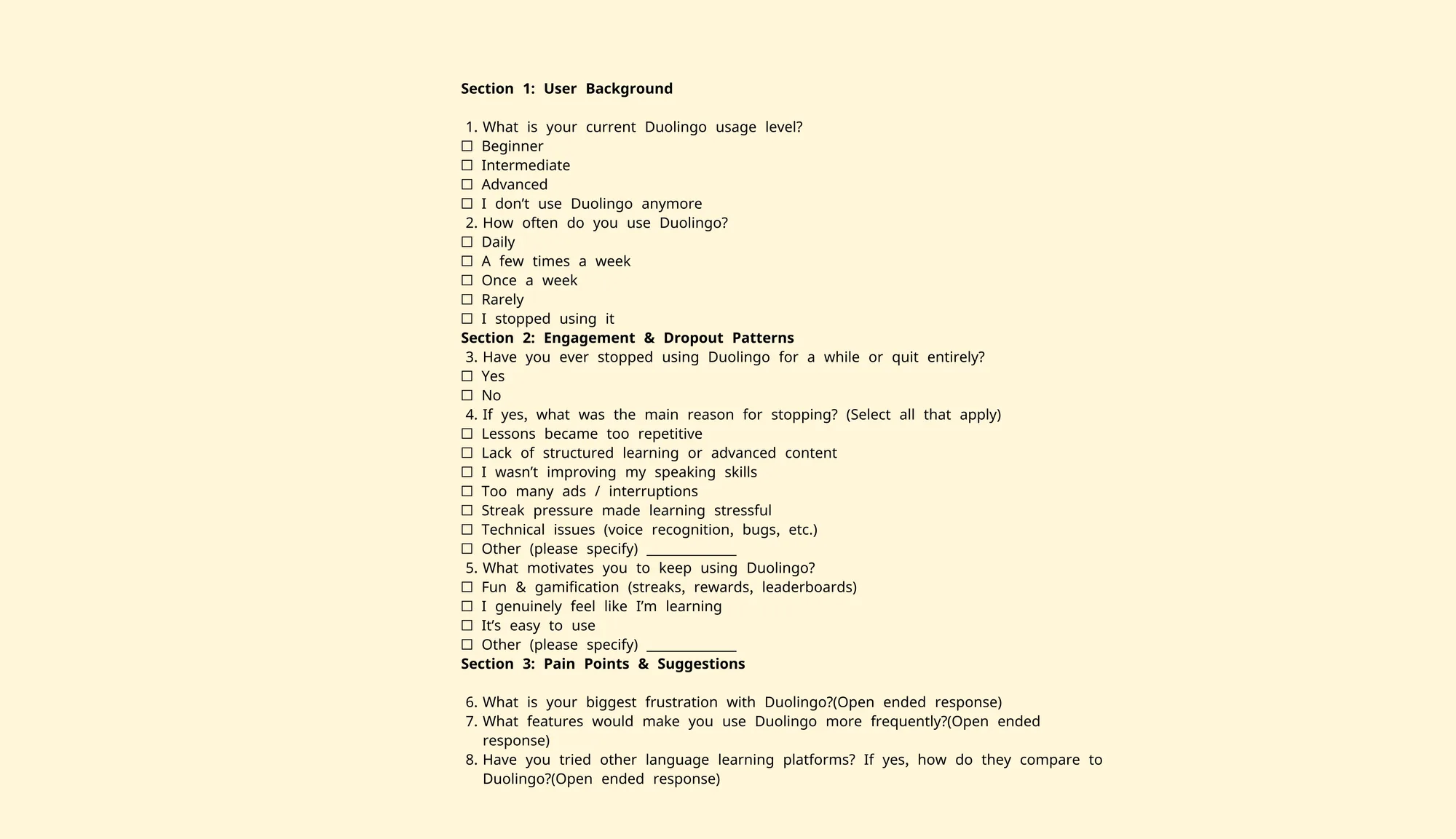
To gather insights on why users stop using Duolingo and their main complaints, I conducted a structured survey covering:
• User Background
• Engagement & Dropout Patterns
• Learning Preferences
• Technical Issues
• Comparison with Competitors
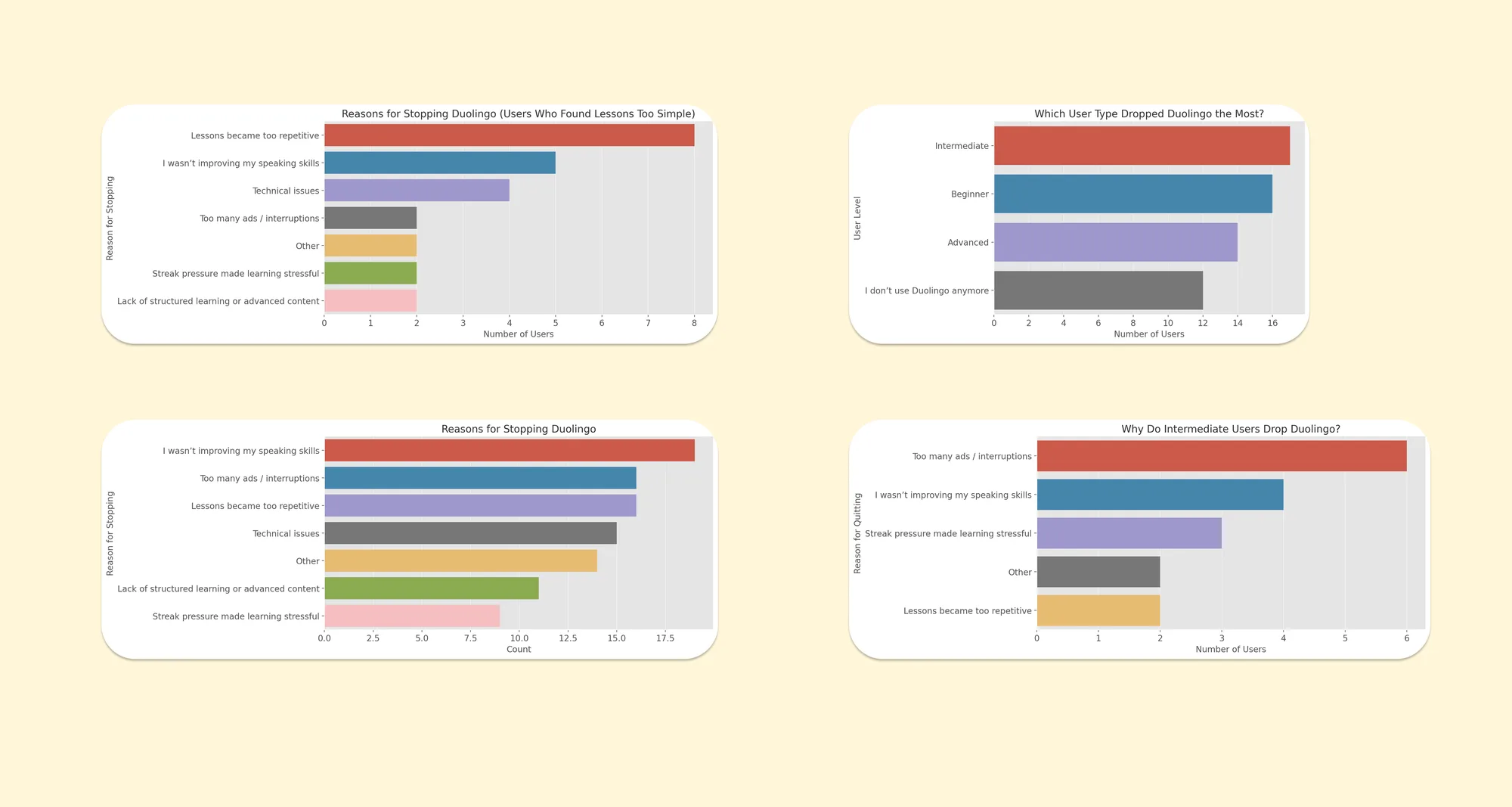
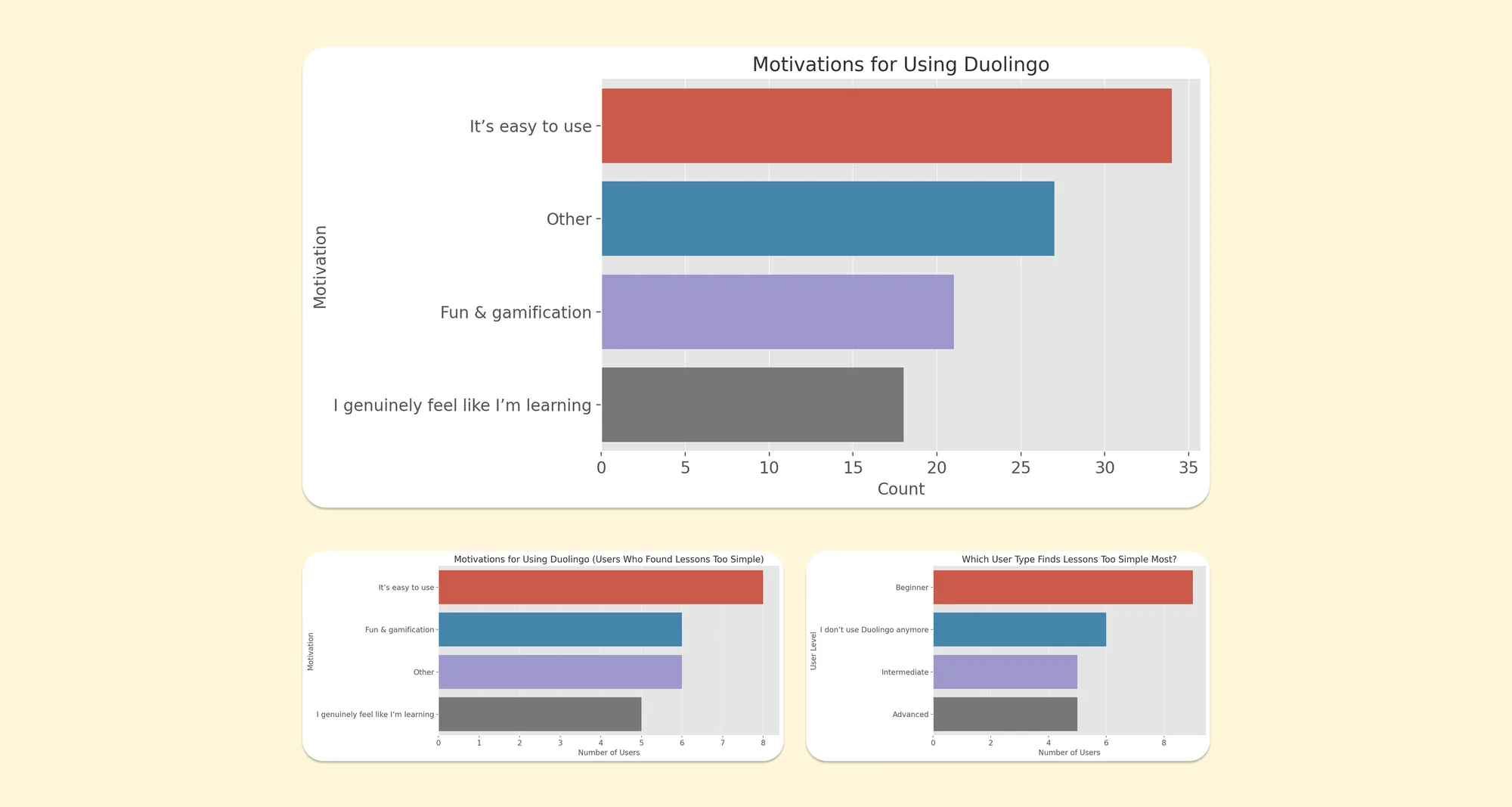
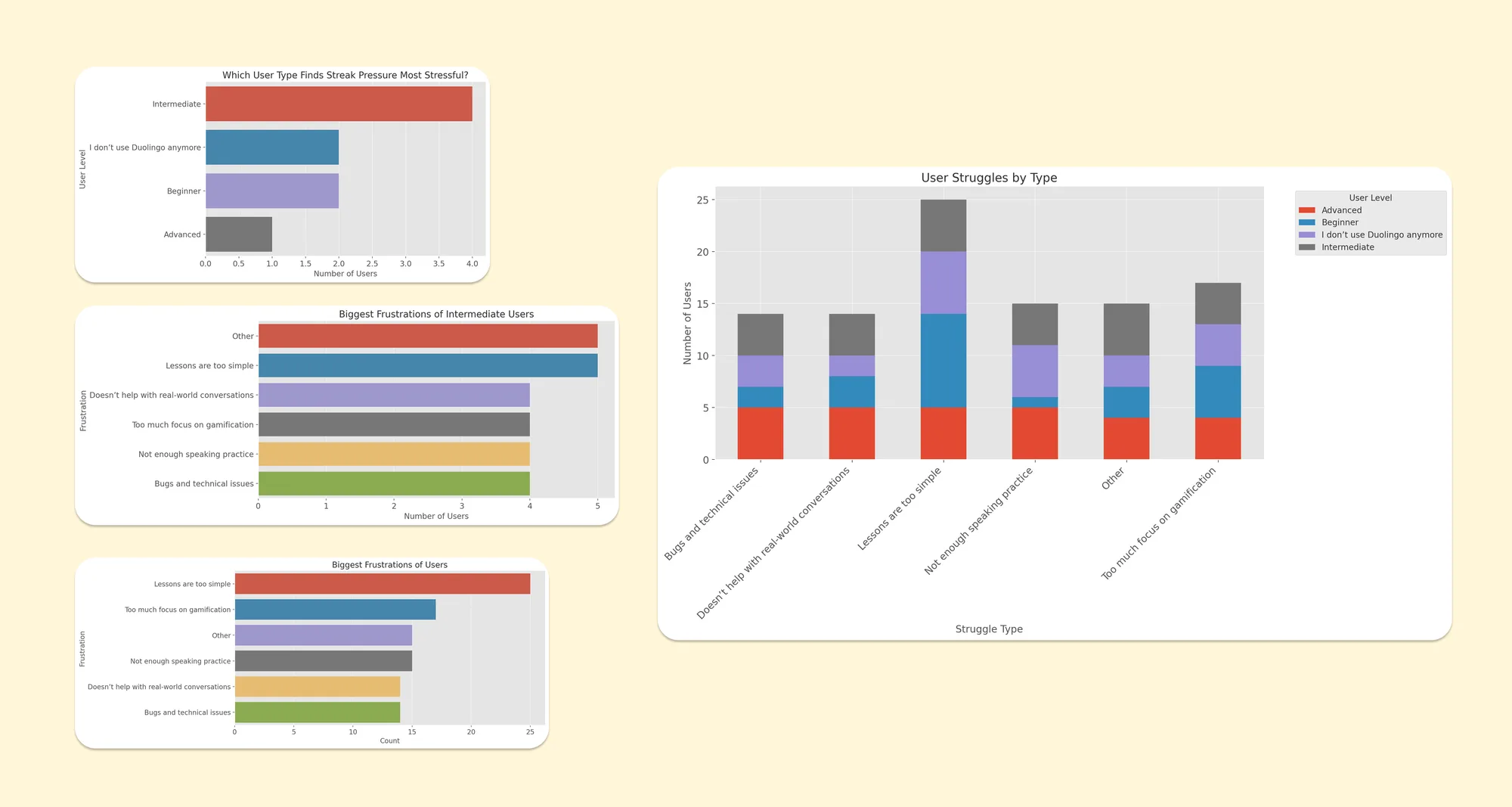
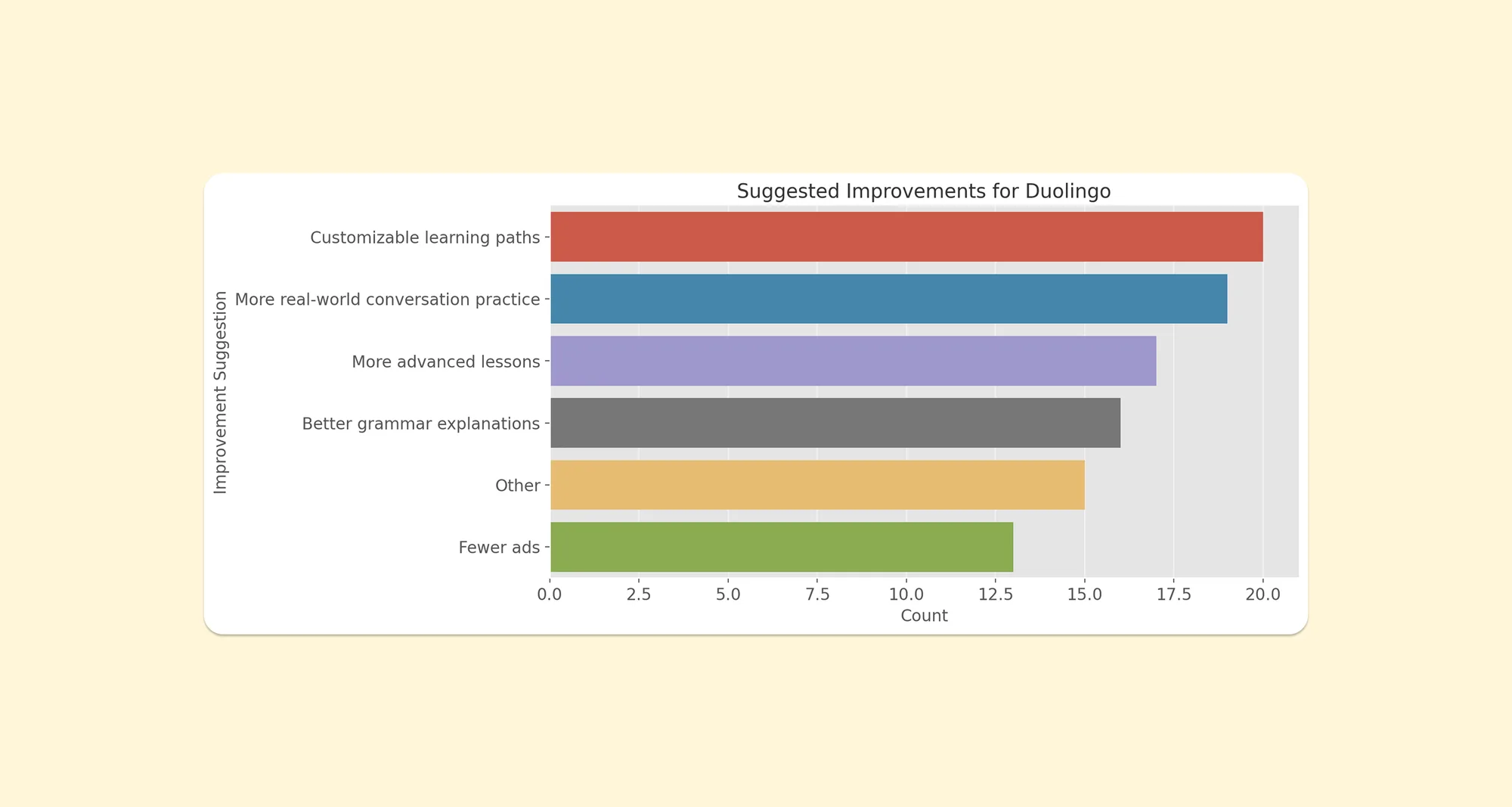
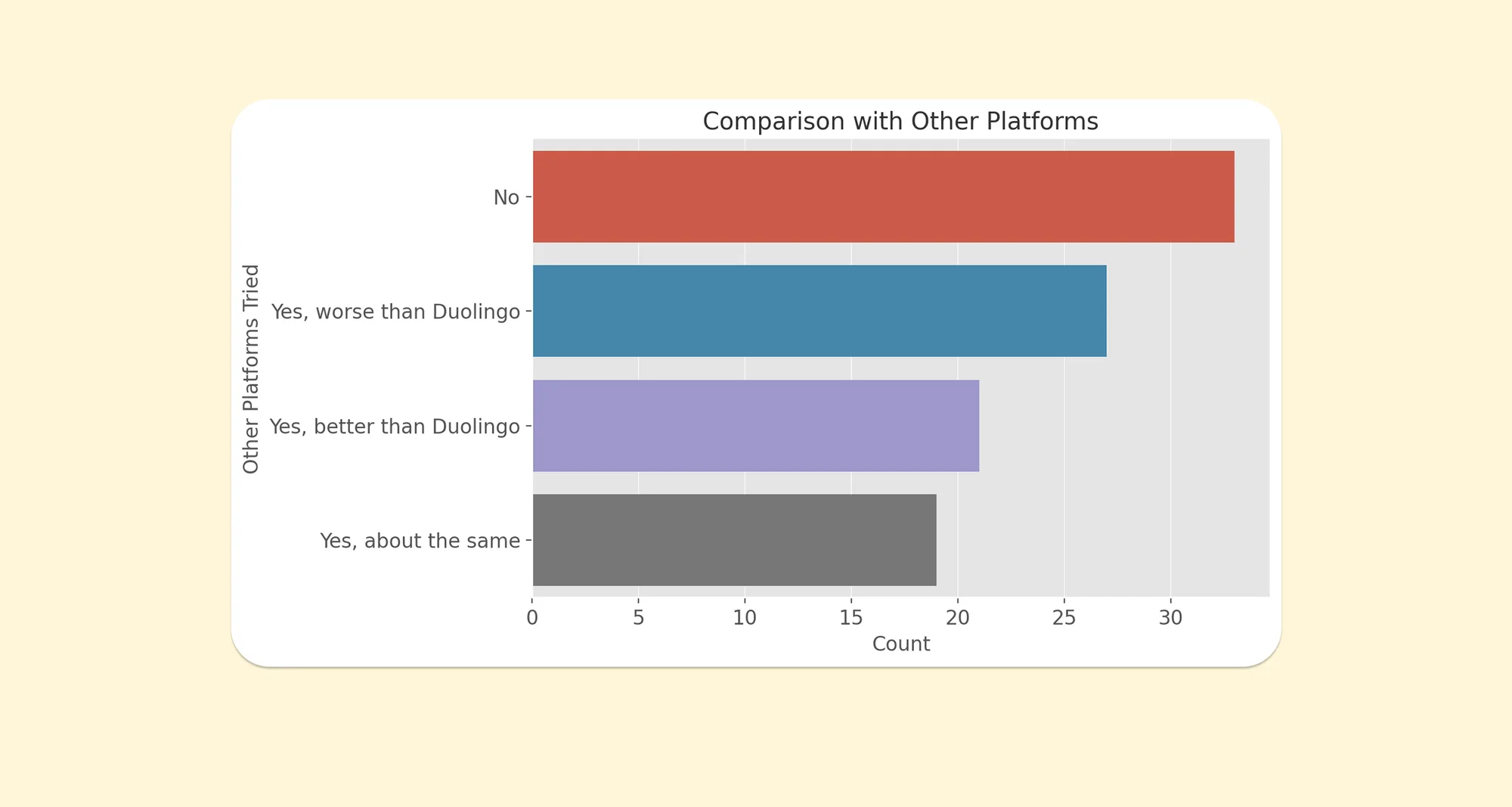
Key Research Insights
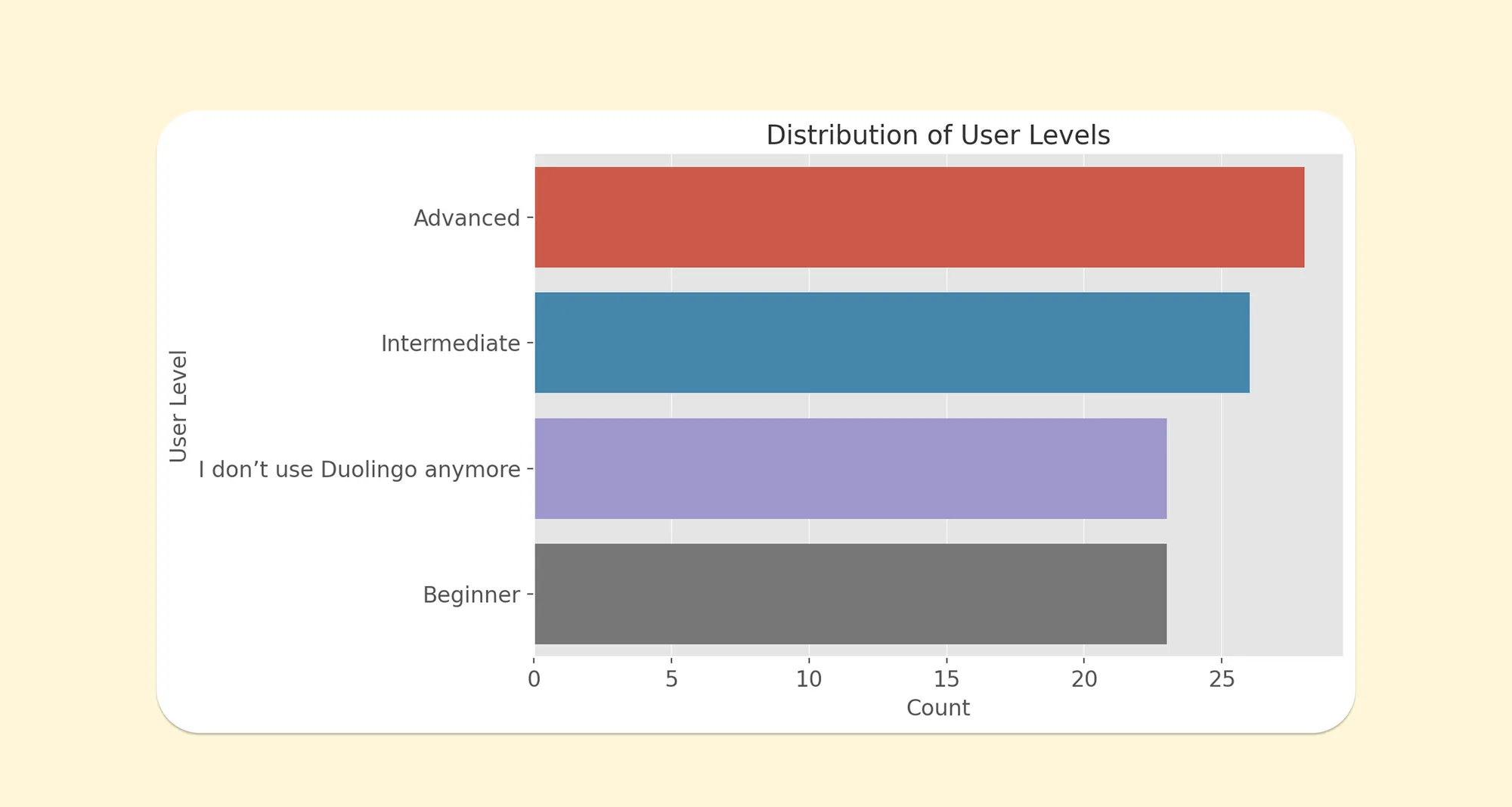
Based on the survey data, here are the key insights:
Which struggles are most common among different user types?
• Advanced Users: Bugs and technical issues (14 occurrences)
• Intermediate Users: Lack of speaking practice (12 occurrences)
• Beginner Users: Lessons too fast (10 occurrences)
• Casual Users: Loss of motivation (8 occurrences)
These patterns reveal that different user segments face distinct challenges, indicating the need for more personalized learning experiences.
Key Findings & Recommendations
Based on our comprehensive research, here are the key findings:
• Duolingo's one-size-fits-all approach doesn't serve all user types equally
• Advanced learners need more challenging content and structured progression
• Casual users require better motivation strategies beyond gamification
• Technical issues significantly impact user experience across all levels
• Speaking practice is insufficient for conversational learners
Recommendations:
• Implement adaptive learning paths based on user goals
• Add advanced content for experienced learners
• Improve technical accuracy, especially voice recognition
• Create more flexible streak systems
• Develop better speaking and conversation practice features